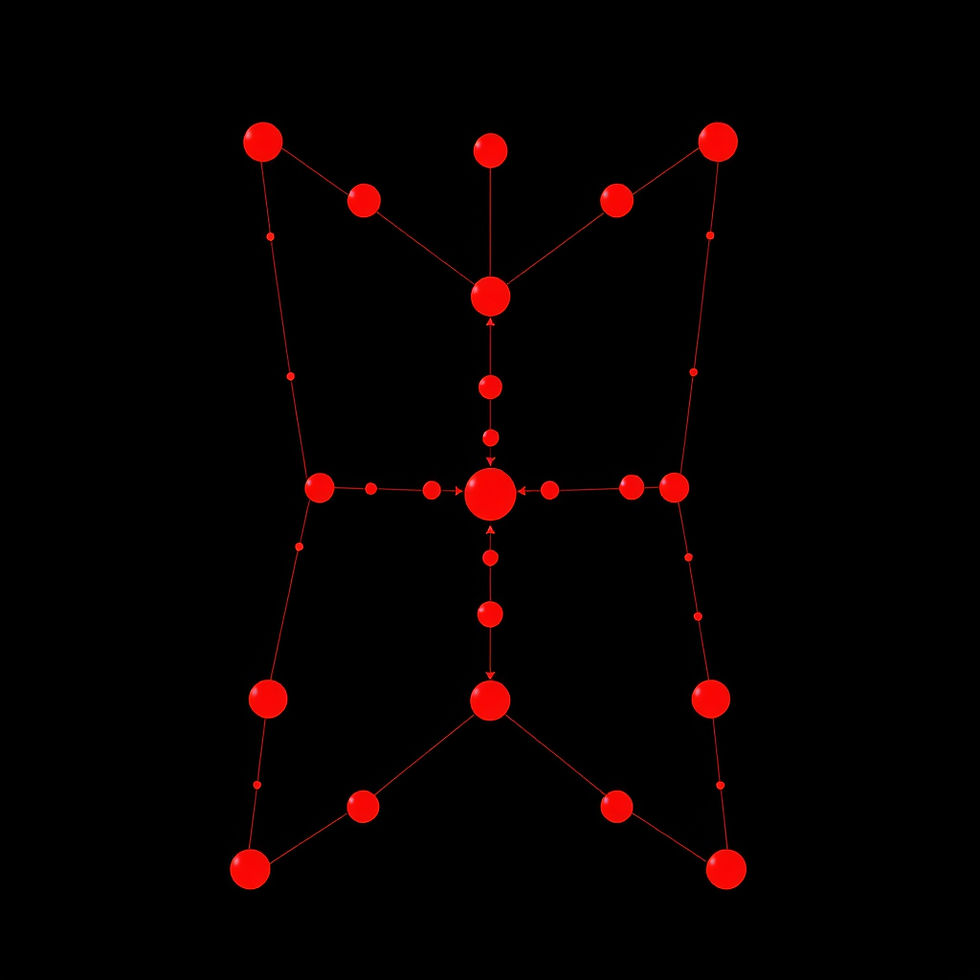
The structure behind manipulation: how it generally works
- Apr 9
- 2 min read
Manipulation is rarely about the message itself.
It is about the structure in which the message appears.
Most scam-related discussions focus on content:
what was said, how it was phrased, or which signals should have raised suspicion.
This perspective is limited.
Because manipulation does not begin with deception.
It begins with construction.
1. The Frame
Every interaction is embedded in a frame.
The frame defines what is normal, what is expected, and what kind of behavior is appropriate.
In scams, this frame is not random.
It is deliberately constructed to feel coherent.
Examples include:
• a professional context (bank, employer, authority)
• an emotional context (relationship, urgency, trust)
• a situational context (problem, opportunity, time pressure)
Once the frame is accepted,
the interaction no longer needs to prove itself.
2. Role Assignment
Within the frame, roles are implicitly assigned.
One side takes control of the situation.
The other is positioned to respond.
This is not communicated directly.
It emerges through:
• tone
• authority signals
• assumed familiarity
• expectations of compliance
The critical point is:
People do not feel like they are being controlled.
They feel like they are acting appropriately within the situation.
3. Gradual Pressure
Pressure is rarely the entry point.
If introduced too early, it creates resistance.
Instead, pressure is layered.
It increases only after:
• the frame is accepted
• the role is internalized
• initial interaction has occurred
Forms of pressure include:
• urgency (“this needs to be done now”)
• scarcity (“this opportunity is limited”)
• emotional leverage (“this affects someone you care about”)
At this stage, the decision environment is already shaped.
4. Action after a decision shift
Decisions in manipulation contexts do not occur in isolation.
They are the result of:
• the accepted frame
• the assumed role
• the accumulated pressure
What appears to be a conscious decision
is often a continuation of the structure.
This is why individuals later say:
“I don’t know why I did it.”
The answer is structural, not personal.
5. Escalation
Once a first action is taken, escalation becomes easier.
The structure now includes:
• commitment
• consistency pressure
• sunk cost
Each additional step feels like a continuation, not a new decision.
Conclusion
Scams are often treated as isolated incidents.
They are not.
They are expressions of a repeatable structure.
The content varies.
The mechanism remains.
Understanding this distinction does not eliminate manipulation.
But it changes how it is perceived.
And perception is where the structure begins.